
I have been a wallflower my whole life. So when women tell me they feel invisible after fifty, I have a question for them.
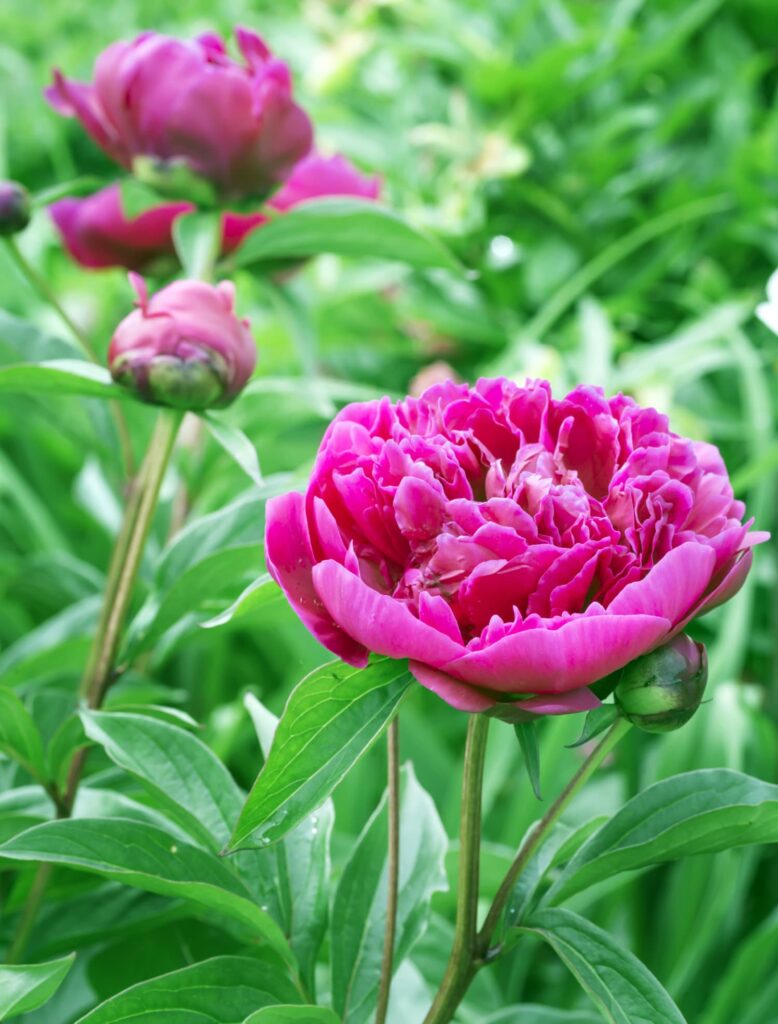
It is late April and the peonies are blooming.
Two of the four roots I planted actually took. I held my breath for three full seasons waiting to find out which ones would make it and which ones would not. That is gardening. You plant, you hope, and you work with what comes up. The two that took are magnificent this spring, some blooms already open, some still buds, every one of them a fuller and more confident version of what pushed up through the mulch that first tentative year, which in one case was just a nub. Same roots. Same plants. Getting stronger every spring.
I have been thinking about those roots.
This post contains affiliate links. If you make a purchase I will earn a small commission at no extra cost to you. As an Amazon Associate I earn from qualifying purchases.
I have been a wallflower my entire life. The edges of a room were always my comfort zone, not a last resort, not a failure of confidence, just where I have always been most myself. I am the kind of woman who finds a good corner, a good book, a good conversation with one person I actually like infinitely more satisfying than being the one everyone is looking at.
For those who need the definition, in Regency England a wallflower was a young woman who sat on the sidelines at a ball, overlooked by the gentlemen, watching the room from the edges. I read every Julia Quinn novel when they first came out, long before Bridgerton became what it is today, and I always felt the wallflowers got rather a bad reputation. They noticed everything. The best ones always do.
Not because I lack confidence, exactly, though I have certainly had my seasons of that. Not because I have nothing to say, anyone who knows me or has read this blog for any length of time would laugh at that suggestion. Simply because I have always preferred the quiet of the edges to the performance of the center.
In my younger years I was the new kid too many times for that. By my count we moved seven times before I was thirteen, and every move meant a new school, a new classroom, a new moment of standing at the front while everyone assessed me. I remember the uncomfortable feeling of twenty pairs of eyes on you when you are nine years old, some sympathetic, some indifferent, some friendly. By the time I was in my formative years, invisibility was not something happening to me. It was something I had chosen and preferred. Cultivated, even. It felt like safety. It still does.
There is even a name for it now. Invisible Woman Syndrome. The idea that women disappear from cultural relevance somewhere around middle age. I have read what women in my age group say about it. I have listened to women I love describe it. And I have never quite known what to say, because feeling invisible after 50 has never been my experience.
But I have been thinking about it. And I have a question I want to ask you, as gently as I can.
Why Are You Letting Someone Else Define What Visible Means?
The second half of life brings real changes, to our bodies, our relationships, our social settings, our sense of what comes next. The children leave. The career shifts. The friendships that were built around a particular season of life quietly reconfigure or disappear altogether. For many women, this is the first time they have looked up from the business of everyday living and thought: now what? And in that pause, the feeling of invisibility rushes in. I understand that. It is a real phenomenon and it deserves to be taken seriously. The good news, and there is good news, is that the pause is not the end. It is an opening. More choices than most of us have had in years.
You are not becoming invisible. You are becoming irrelevant to a very specific kind of attention, the commercial kind, the kind that valued you as long as you were young enough to be marketed to. That attention was never really about you. It was about your demographic. And now that your demographic has shifted, that attention has moved on. And when that attention goes, it feels personal.
It is not personal.
And yes, it hurts. Of course it does. We are human and we want to be seen. But I want to ask you something honestly. Was that visibility ever actually what you wanted? Or was it simply what was available, and you took it because the alternative felt like becoming nothing?
Because those are not the same thing.
The Difference Between Being Watched and Being Known
I have never been watched in any meaningful sense. I walked into rooms and nobody particularly noticed, and that suited me. What I have had instead, my whole life, is the other thing. Being known. A handful of people who actually see me. My mother, who has always understood me in ways I cannot fully explain. Bill, who has watched me for thirty-two years and still finds me interesting, which may be the greatest gift one person can give another. Three friends who know the whole story and love me anyway. And this community, you, reading this, some of you who have been here for years and who I have come to think of as real and present in my personal life even though we have never met.
That is visibility. That is the real kind. And it has nothing to do with whether the culture thinks a woman my age is worth looking at.
The women I admire most at this stage of life are the ones who stopped waiting for permission to be themselves. Who got quiet and got interested in their own lives. Who started paying attention to the things and the people that actually deserved it.
They did not become invisible. They became selective. There is a difference.
The Question Worth Asking If You Feel Invisible After 50
If you feel invisible after fifty, I am not dismissing that. I am asking you to examine it.
Are you fading because something real has been taken from you, your health, your community, a relationship, a sense of purpose you have not yet replaced? That is a genuine loss and it deserves a genuine response. Talk to someone. Find your people. Try new things. Build something new.
The feeling of disappearing from your personal life when your children leave or your marriage changes or your career ends is real and it deserves attention. That is a real and significant loss and it is not the same thing as the culture losing interest in your demographic. One is about your life. The other is about their bottom line. They deserve different responses.
Or are you fading because you have let a culture that was never really paying attention define your worth?
Because if it is the second thing, here is what I want you to know.
You were never invisible to the people who actually looked.
The culture was not looking at you. It was scanning for youth and for the kind of beauty that sells things. You were never a person to that system. You were a demographic. And when you aged out of it, they moved on. Not because you became less. Because you were never really what they were looking at.
The people who have actually looked at you, who have watched you think and decide and love and grieve and get back up, those people have never stopped seeing you. And they never will.
There Is More Than One Way to Be Fully Yourself
I want to be clear about something. This is not an argument for wallflowers.
I have a sister-in-law who is the opposite of everything I have just described. She is beautiful and she knows it and she does not apologize for it, which is its own kind of courage. She would not leave the house without a full face of makeup and an outfit that matches from the shoes up. Not because she needs the validation, but because that is simply who she is. That is how she moves through the world. She has what I can only describe as the it factor, the quality that makes a room shift when someone enters it. I have walked behind her and heard strangers comment. She does not glide into a room so much as she lights it up.
I have known her since high school. She married my brother and I have watched her through every stage of life with a mixture of admiration and genuine bewilderment. How does she do that and does she ever get tired? The answer, as far as I can tell, is occasionally yes, but mostly she just is that way. It is not performance. It is her, completely and without apology.
And here is what she and I have in common, underneath everything: we both know exactly who we are.
That is the whole point. Not wallflower versus woman who lights up a room. Not invisible versus visible. Not gray hair and no makeup versus full face and heels on a Tuesday. The only question worth asking is whether you are being yourself or whether you are being what you think is required of you. Neither of us is looking for external validation from a culture that was never paying attention to the right things anyway.
You do not have to be the main character to matter in the story. You just have to be genuinely, fully, unapologetically you.
If you are the woman who glides into a room and loves every minute of it, hurrah for you. That is a gift and it is yours and you should never dim it for anyone.
If you are the woman who finds the good corner and stays in it and notices everything, hurrah for you too. The world needs both of us.
What the world does not need is either of us pretending to be the other, or measuring ourselves against a standard that was never built to fit us in the first place.
The Peony in Year Four
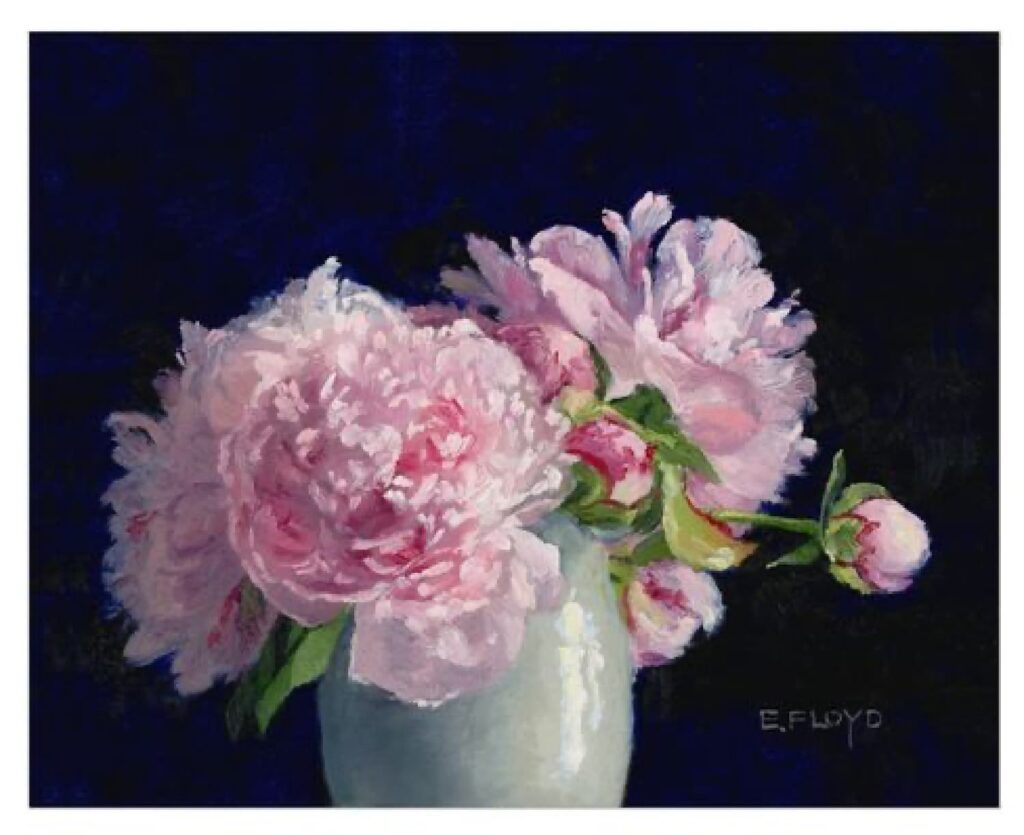
Two of my four peony roots took. The other two never came up and that is gardening. I am grateful for the two that did. The roots that took have not changed since the day I planted them. But what comes up from those roots gets stronger every year. Every year adds to what rises from them. More stems. More buds. A more complete expression of what the plant actually is. Nobody watching them push through the mulch in March would call them fading. Nobody would say they are becoming less. And yet somewhere in the aging process, we decided that was exactly what was happening to us.
Spring has always known something about this that the rest of the world has not caught up to yet. Things with deep roots do not fade with age. They get stronger. What looks like disappearing into the ground every winter is just the plant resting up for what comes next.
You have a root like that. So do I. Whatever the culture thinks it sees when it looks at a woman over fifty, or more often looks past her, it is not seeing the root. It never was.
A Note From the Wallflower
I have spent a lifetime at the edges of rooms and I want to tell you that the edges are underrated.
You see more from there. You notice things the people in the center are too distracted to see. The small moment between two people. The way the light changes at four o’clock. The dog asleep in the patch of sun on the kitchen floor. The particular quality of a Tuesday afternoon when nothing is required of you and everything is available to you if you simply look up and pay attention. New things become visible when you stop performing and start noticing.
I did not choose the edges because I was afraid of the center, though I was, for a while. I chose them because that is where the interesting things happen. That is where the real life is. I stopped waiting to be invited into the background of my own life a long time ago. I just moved in.
The best wallflowers always did notice everything. I stand by that.
You are not invisible. You never were.
You are just, finally, free to look at the things worth seeing.
Tell me in the comments, are you a wallflower or a woman who lights up a room? I am genuinely curious. I suspect most of us are somewhere in between, and I would love to know where you land.
If you like the post please share and don’t forget to follow along on Facebook, Instagram or X or Pinterest.
You might also enjoy:
Who Am I Now? How Midlife Didn’t Change Me — It Reminded Me
You Have Earned This: A Permission Slip for Women Over 50
Intentional Living After 50: What It Really Looks Like



I would say I have never been a wallflower but certainly not one who lights up a room either!! Great post Eliz!!
Cindy,
I would have to disagree with you on that. Your smile and personality lights up the internet and I am sure any room that you walk into! I hope that you are having an amazing trip! Cannot wait to heal all about it.
xo
I was always one who never wanted attention. Then I married a man who was voted Class Clown and Class Flirt in high school. He was the life of the party. Over the years, he brought out my confidence and I supplied him with the stability he needed. God truly blessed us. We just celebrated our 48th anniversary. Today, I’d say we are both somewhere in the middle. I started learning who I am when I was around 50. Menopause is a great teacher. So is cancer, which I had during that time. I let go of “friends” who drained me and stopped being a people pleaser. I loved this post!
I am tall and growing up was always relegated to the back row out of sight. I don’t wear bright colors or prints because I don’t want to stand out. I’m now 65 with gray hair and I’m loving not being noticed because then I can go about my business without much scrutiny. I’ve learned over the years how to be noticed if I choose but staying in the background suits me just fine. As an adult I’ve never felt not heard or invisible. Sometimes the ones not noticed get the most work done.
Beautiful!
Very wise post, Elizabeth….and thought provoking.
I never really enjoyed the attention when I was younger to be honest. I am happy with my “faded” looks. And more interested in life and living than ever.
I too moved many times as a girl and had many awkward “fresh starts.” Those experiences became part of the thread of my being and as a young woman I was sometimes able to push myself through awkwardness to the centre of the room. It was not where I was the most comfortable but somewhere that I thought was the place to be. I learned to have and use my outside voice, not just an inside one. My younger days seemed to be all about pushing myself outside of my comfort zone. It wasn’t until I embraced my comfort zone that joy and fulfillment embraced me. It could be that the zone had grown along with me. I believe that the Gray Hair Syndrome is real but that’s okay. I choose to speak out and be noticed on my terms or disappear with my gray hair into the woodwork and watch the world go by around me. It all depends on the mood that I choose.
Beautiful post. Now that I am retired from work that I loved, I realize how much I did NOT enjoy the corporate meet and greets, the office Christmas parties, the company team building retreats. Oof. What a relief to be done with all that. Now I can enjoy a long lunch and a walk in the park with a close friend, improve my art skills, and just breathe. I just returned from a big university event with my husband. He is the most outgoing man in the room and loves every minute. I can enjoy and participate for a while. At the end, he is energized and I am exhausted! As my very wise dad always said, it’s the difference in people.
Sharon, I can relate to everything you wrote. My husband is the same and over the last 30 years we have had to attend many parties, conferences, etc and honestly I did not like them at all. What can I say, it’s just not me.
I hope that you are enjoying retirement, your art and your time with friends.
What kind of art do you enjoy? Painting?
Have a wonderful week.
I am a colored pencil artist, one of the slowest media known to man. But after many hours, my pieces turn out with a realism that pleases me. Also, today I bought a Jo Malone fragrance called Peony and Blush Suede. It’s a fairly good representation of peonies, which I think you planted in my mind this week. Not lily of the valley, alas.
That sounds fascinating. I am not an artist of any kind, except in the kitchen. I did not get any artistic genes. Ironically, I have several cousins who are artists, one who switched from fine art to gaming art.
I too have the Jo Malone Peony and Blush perfume and like it but as I mentioned I am still searching for the elusive lily of the valley. One day I will find it.
Great post Elizabeth. As we age we begin to realize what is important and what is pressure from society. After the children leave we have time to breathe and focus on the what we truly love and then we can enjoy the becoming the person inside who has been too busy to stop and find herself. About your peonies. The ones that did not bloom may be planted too deep. Also did you fertilize them in the early spring and uncover the mulch early in March. Gardening teaches us a lot about patience and waiting to enjoy the blooms. Good luck.
Mary Ann,
You are so right. Being a mom and raising kids does not leave much room to discover yourself or live your dreams. I hope that you are focusing on the person that you want to be at this stage in your life.
As for the peonies. I am a complete novice at gardening. When I planted the bare roots I was such a “newbie” I thought they would bloom the year I planted them. I think you are probably right I may have planted them too deep. And no, I did not know until a few weeks ago that they need fertilizer. I did pull the pine needles off of them so they could breath. I now have fertilizer for winter, I believe you can fertilize them in the fall? If that is not correct please let me know.
As for patience, you are correct. Patience, anticipation, excitement and joy too.
Thank you!
While I didn’t have the experience you had of constantly moving (which had to shape you), I was a shy child but as I grew into my teens I became more outgoing and was more or less “popular” in high school. I liked to be involved in clubs etc. I’ve made friends easily. I retired from teaching on the college level in a health field and loved what I did. Now I’m 73 and letting my gray hair slowly grow in but loving my life. Yes, I see young people dismissing me because I’m “an old boomer” but I stand my ground and know how wise and blessed I am. Loved this post. Beautifully written!
Nanci, I love learning more about you. What sorts of clubs were you in? Do you think joining the clubs helped you become more outgoing? Believe it or not, even though I was a wallflower I was in 2 plays in HS and I loved it.
It sounds like at 73 that you are living a well earned retirement on your terms. You are so right, you are wise and blessed and even more wonderful that you realize it.
Have a lovely week.
Before Title IX, there weren’t any girls sports teams but I joined the HS girls athletic association and we played each other in volleyball and basketball. I was elected to student council, in the National Honor Society and Pep Club. I know that joining things is how you make friends. Even now I am in an adult class at my church and have met people that way, formed a book club after I retired, and there is a group of like minded friends who meet for lunch monthly to keep hope alive in this crazy world. I so cherish my friends.
That is so neat that you were in 2 plays. I wish I had gotten involved in drama but never did. Have a wonderful weekend.
Nanci, I was in a few groups as well. National Honor Society, a drama club, etc. But what I find most interesting is that from moving around a lot I never let myself get attached to people. I have no friends in my life now that were from high school, or college, or working on my advanced degrees. It’s as if every time I finished that task I left them behind and moved again. My 3 best friends are from my adult life and I could not be more blessed. I have found myself in these last few years more open to joining things especially at my church, maybe it is because I know that I will not be leaving here and feel safe. Who knows.
Thank you for sharing your life and your activities, it is nice to get to know you better.
Have a lovely weekend.
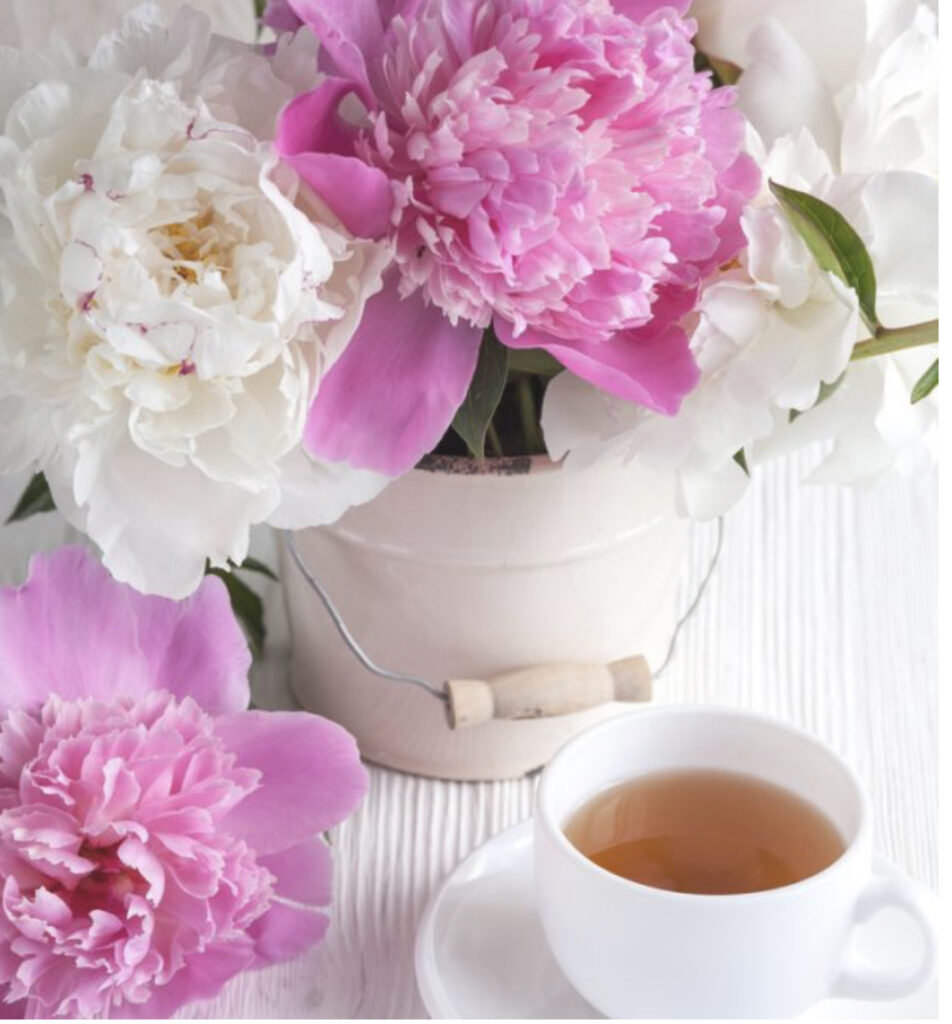
Great post and love the peony pictures – one of my favorite flowers! I, too, am an observer and have often been a wallflower. I can’t say that I feel invisible due to age, although I’ve sometimes felt a little invisible / unmemorable generally. I don’t like being the center of attention – never did. And I’m not a joiner – groups, clubs, committees. I’ve tried as I felt I “should”, but just not for me. I will say I have more friends as an older woman than I ever had as a young woman. Pushing out a little bit, being willing to maintain friendships, being willing to make sure meet ups happen, being willing to say “yes” more often all have contributed to having more friends.
Dear Elizabeth,
Over the years of getting to know you I feel we would become friends. You are an up-front person who shares her heart and soul and what you see is what you get. It’s refreshing in so many ways.
I can only imagine how difficult and rough it was moving as a youngster and being the new person in your classroom. Often all eyes are on the new kid in the classroom, that in it’s self can make you want to hide out in the coat room or run home to your house. I’m surprised that has not affected you into your adult hood, maybe it has. Some girls can be so mean. I’m thankful I was raised with lots of respect, kindness, and be grateful and thoughtful for everything you have. These values mold you into so many things in life. Also entering a room of strangers that you do not know or have never met. My husband dislikes superficial conversation, he is extremely bright so he would be a wallflower.
ME: I’m a comb of both, I’m not painfully shy I can walk into a room and introduce myself and try to integrate with everyone. If someone is not approachable and is socially awkward I move on. I find in a group of ladies over lunch I do chat, however I prefer to be a listener. I seriously feel if a person is interested in what is happening in my life they would ask. I prefer one on one with a close friend. This is when quality conversation occurs for me and that adds to my life. I always try hard to find my comfort level with everyone I meet. I have dealt with women all my life feeling jealous of me. This has limited my friendships unfortunately. Women can be tricky. My “inner pond of friends” are the ones that have a high degree of confidence.
Your sister-in-law sounds like a highly confident lady. Good for her. Thank goodness we are all different. I have a niece (like my daughter) sounds exactly like your sister-in-law. In my mind I call her “the perfect.” Gorgeous everything, perfect husband and two sons the same. She has the most gorgeous thick hair and is brilliant too. This does not impress me, what does is the kind and giving heart. As we mature that can slowly be taken away from you and chronic issues come and hit you broad side and that is the day that everything changes. What is left in life is how we respond to stuff.
Keep sharing your heart, I really like you.
Take TLC of yourself, and stay safe out there.
I definitely was (and still am) a fairly quiet person who is on the side and observing the world around me, which I love doing. I’m at my best with a friend or a small group of people. When I was working I had to turn on a level of social behavior that was not true to my nature, and it was sort of exhausting. Now that I am retired, I am delighted to be able to live in a way that is true to myself.
I looked up the word “wallflower” and some of the descriptors that can be associated with wallflowers, which sounds pretty great to me!:
Observer: Highlights their ability to notice details and understand social dynamics.
Listener: Reflects their tendency to listen more than speak, often leading to deeper insights.
Sensitive: Indicates their emotional awareness and empathy towards others.
Thoughtful: Suggests a careful consideration of their surroundings and interactions.
Oh my, I loved reading this and needed to hear these words. I’ve been a wallflower all of my life, but I have always felt ashamed of it. Not anymore! I’ll take my place on the edge of the room and ENJOY watching all the happenings,
– a beautiful 60-year-old wallflower LIVING in TN
Molly, welcome fellow wallflower. Perhaps we should start a club! I will have to think about that. I appreciate your kind comments and hope that you find more to enjoy here.
Have a wonderful weekend.