
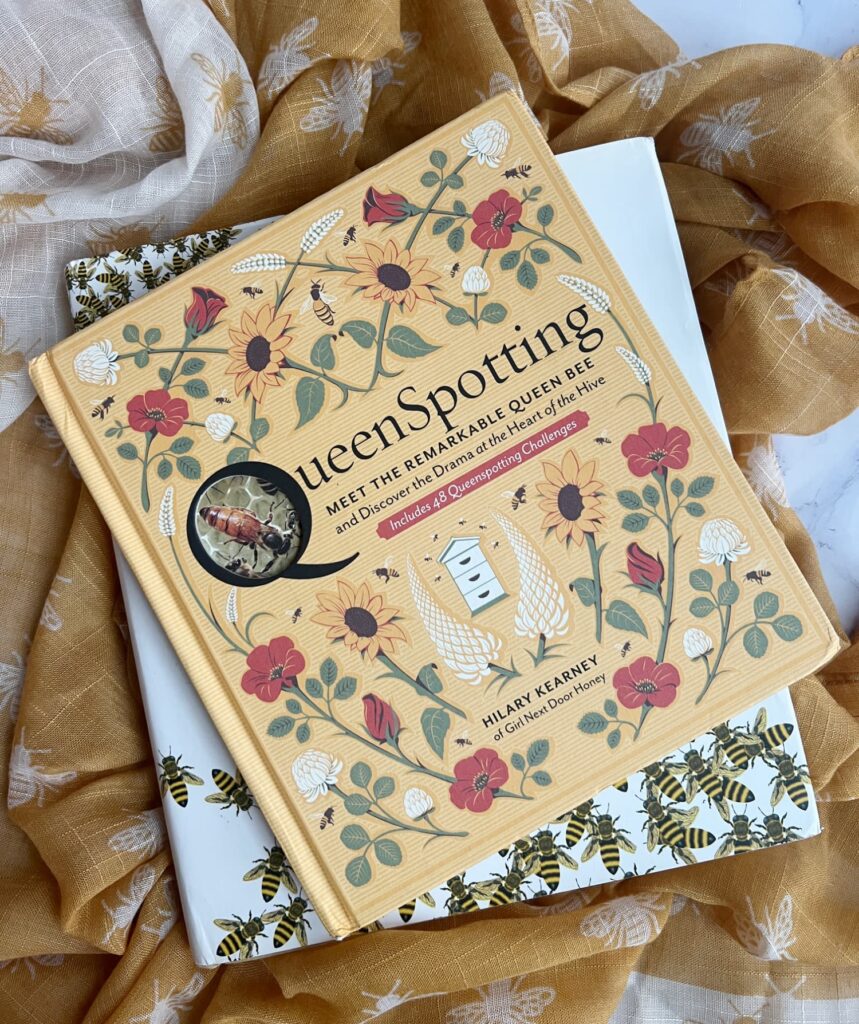
There is a moment most of us have lived. You walk into a room (a book club, a neighborhood gathering, a work meeting, a family holiday dinner) and you can feel it before you can name it. The temperature in the room is set by one woman. She decides who gets warmth and who gets cold. She does not announce this. She does not need to. Everyone already knows.
You are looking at a Queen Bee.
I have met a few in my time. I am, by nature, a worker bee. Head down, quietly doing what I love, genuinely happy when the people around me thrive. It is not something I had to work at. It is simply who I am. I noticed early on that worker bees have a strange effect on Queen Bees. We enchant them, not because we are trying to, but because we are not competing. And yet something about our quiet contentment unsettles them anyway.
If you have spent any portion of your life managing a Queen Bee, tiptoeing around her moods, shrinking yourself so she stays comfortable, wondering why you feel so tired after every single interaction, this post is for you. Because here is what I want you to hear, and I mean it: you have one life. One. And it is far too short and far too beautiful to spend it managing someone else’s need to be the only flower in the garden.
A Queen Bee Is Not the Same as a Mean Girl
It is worth saying this clearly, because the two get tangled up together and if you confuse them you will handle them the wrong way.
A Mean Girl is cruel. Her tool is humiliation: the cutting remark, the deliberate exclusion, the whisper campaign that starts the moment you leave the room. She wants you to hurt, and she wants an audience while you do. The damage she causes is visible, even when no one names it.
A Queen Bee is something quieter and in some ways more complicated. She is not necessarily unkind. She may be perfectly warm, generous even, as long as you stay in your lane. Her tool is not cruelty. It is control. She controls access, approval, and the invisible architecture of who rises and who stays put. She will support you right up to the moment you threaten to outshine her. Then the temperature changes and you feel it before you can put words to it. This chill you cannot quite explain to anyone else, because nothing, technically, has happened.
That is the thing about the Queen Bee. She has not technically done anything wrong. She has simply made sure you cannot get any taller. And unlike the Mean Girl, whose toxic behaviors tend to be visible to the people around you, the Queen Bee’s damage is the kind that leaves you wondering if you imagined it.
You did not imagine it. Psychologists call this queen bee syndrome, and they have been studying it in workplaces, in academic settings, in social circles, for decades. What the research does not always capture is what I know from living it: queen bee syndrome does not retire when the career does. It follows women right into midlife, into book clubs and neighborhood associations and family gatherings and the group chat that somehow always makes you feel a little worse about yourself. The setting changes. The behavior does not.
Why She Does Not Change When She Gets Older
I used to think it would soften with age. That women would get to fifty or sixty and simply stop needing to be the most accomplished, the most admired, the most indispensable woman in the room. I was wrong.
A woman who has built her whole sense of herself around being the Queen does not stop needing that when the children leave or the career ends or the body starts doing things she did not authorize. If anything, she needs it more. Those midlife shifts feel like a threat to everything she has constructed. So she tightens her grip. The hierarchy gets smaller (a book club instead of a boardroom, a neighborhood instead of an office) but the dynamic is identical.
We have heard the rallying cry for years: support other women. Lift each other up. And most of us do, genuinely and wholeheartedly. But the Queen Bee missed that memo, or she received it and filed it somewhere she will never find it again. She supports other women the way a stage supports a performer. Only if she is the one standing in the light.
I do not say this with unkindness. I say it with the sadness of watching someone run an exhausting race she did not have to enter. But understanding where the behavior comes from does not mean you are required to wear its effects. Those are two different things, and only one of those is yours to carry.
When the Queen Bee Is in Your Own Family
This is the part nobody wants to say out loud, so I will. Sometimes the Queen Bee is not a colleague or a neighbor or an old friend you have slowly drifted from. She is at your holiday table. She is your sister, your sister-in-law, a cousin, an aunt. She is the woman you cannot simply walk away from because family is family and the holidays come around every year whether you are ready for them or not.
You are not going to change her. I know we want to believe that a good conversation, a moment of real connection, a reaching-out will shift things. Occasionally it does. More often it does not. A woman whose Queen Bee behavior has run unchallenged for decades does not change because someone finally named it. Set that down. You are not responsible for her transformation.
You can love someone and still protect your peace from her. These two things coexist more easily than we think. You can show up to Christmas dinner, be genuinely kind, and also quietly refuse to participate in the hierarchy she is running. Smile. Be warm. Do not compete and do not shrink. And then go home.
Find your people within the family, because they are almost always there. The sibling who just wants everyone to have a good time. The cousin who sends you a text after a hard gathering that says simply: I saw that. Those are your true friends, and they happen to share your last name. Lean toward them. Let them be your anchor when you are in the same room as the Queen.
How to Handle a Queen Bee Without Losing Yourself
The Worker Bee Has the Better Life
Here is what the Queen Bee mythology gets wrong: in an actual hive, the queen cannot survive without the worker bees. She cannot feed herself, build the comb, raise the young, or keep the colony warm through winter. Everything that sustains the hive comes from the workers. The queen’s only job is to lay eggs. She is not, as it turns out, running anything.
I have always found deep satisfaction in being a worker bee. Head down. Doing the work I love. Building something. Celebrating the woman next to me when she publishes the book or plants the garden or starts the business or raises the extraordinary child. There is no scarcity in that way of living. There is, actually, an abundance. When you are not burning your energy maintaining a throne, you have all of it for the things that actually matter.
What I have also found is that stepping away from an unhealthy friendship, from a circle that has quietly cost you more than it gave, leaves something behind that is not emptiness. It is space. Room for the real connections, for the women who show up in the difficult times without keeping score, for the friendships that do not require you to be smaller than you are. Those friendships exist. I promise you they exist. But you cannot find them while you are spending everything you have managing a Queen Bee.
I wrote in an earlier post about being the wallflower, the one who stands at the edge of the room and watches and notices and sometimes feels invisible. I still am that person in many ways. But invisibility has its own gifts. When you are not performing, you are living. And the life lived quietly, purposefully, without an audience, that is not a lesser life. That is a free one.
One Life. Yours. Live It.
Here is what I want you to carry out of this post.
You have one life. Not a practice round. Not a second draft. This one, right now, with your particular joys and your particular sorrows and the particular morning light coming through your particular windows. You do not have a single day to waste managing someone else’s need to be the tallest person in the room. Not a single one.
The Queen Bee will always exist. In your neighborhood, at your family table, in the group chat, at the garden club. She is not going away. But she does not get to set the temperature of your life. That is yours. It has always been yours.
Find the women who want you to win. Become the woman who wants other women to win. Build your corner of the hive with warmth and generosity and real friendship, the kind I will be writing about when I sit down to write The Friends Who Stay, because those women are the ones who change everything.
The Queen can have her crown. You take the life.
Have you had a Queen Bee in your life, in a friendship circle, at work, or at your own family table? Did you find your way through it, or are you still somewhere in the middle of it?
If this resonated with you, I would be grateful if you passed it along to a woman who might need to read it. You can also find me on Pinterest and Instagram.
You Might Also Enjoy:
Three Friends, Four Siblings and Why That is Enough
On My Radar


The Queen Bee Syndrome sounds exactly like narcissism. Both my parents are narcissists. My father is loud and demanding. A mean girl. Everyone knows he is the bad guy. But my mother is the more dangerous one. She is a manipulator, but hides her behavior behind sweetness. I love what you said about loving them but protecting your peace. I have learned (the hard way) not to let them into that protective bubble I have put around my heart. They are now in their 90’s and I would love if I could let my guard down, but they consistently tell me who they are. And I have learned to listen. Thank you for your insight and wisdom. It helps reinforce my resolve.
Ellen, thank you for sharing your story. I am sorry that your parents are not very kind people. That must be incredibly difficult. I have known many people like the ones that you describe and it is difficult to be around them. In fact just this week I let my guard down around one of them and came away hurt and “singed.” It is difficult to believe that at 59 your feeling can still be hurst by a “friend.”
Are you the caretakers of your parents? If I may ask how do you care for them or have a relationship with them when they treat you like this?
Have a nice weekend and thank you again for sharing. I will keep you in my prayers.
Oh my goodness, Elizabeth, your writing is exquisite and so just spot on! Many, including this particular subject, makes me smile with confirmation, that what I know in my heart and mind, is true and I am in fact not alone. And there always have been, in some form or fashion Queen Bees and always will be, in every generation- past, present and future. Perhaps it boils down to inherently human traits good and not so good. I sure do appreciate your sharing of your time, insights and gifts of writing too! Thank you for all that you do.
Thank you Beth, that is very kind of you. You are absoluty correct, there have always been Queen Bees,in every generation. Sadly, I think many of use lacked the will or capicity to deal with them, especially if they were family. Now I think self-preservation is something that we prize and becomes more and more important as we age.
I hope that you have a wonderful weekend.
Oh my gosh! YES that is it! Self-preservation that quiet piece in that, it has not gotten the attention, thought and opportunity it so much derserves! Thank you thank you thank you!
Shew! I could (should) write a book. This post hit home hard! My Book would be called “A Life of Bee Stings, from the women I trusted the most . . .”
Linda, start writing. I would buy the forst copy! I love the title, “A Life of Bee Stings, from the women I trusted most!”
Wow Girl !! I wish I lived near you…we could talk( and be friends too :))
I have had several situations in my life that a QB was taking up space..card club that I left , but the worst was a work place situation. Why do these people make it into charge positions? I was constantly given the short end of the stick with assignments ( I worked as an operating room nurse) she acted like she was waiting for me to complain but as you said head down and do the work. It wasn’t until I had retired and my replacements ( yes 2) reported her and she was asked to leave. It seems as if this type of person learns of something and holds onto it…like knowledge is power…then when their time is right they bask in the spotlight. This almost sounds like our political world….except a mean girl is in the top spot !!
Thanks for a great piece of work…except it brought back some bad memories
Peg, I think there are so many like minded women that read and comment on the blog. I would love to sit with you and have a long chat. I have no idea how these women get these positions. Maybe because people can’t complain? I have no idea, I just wonder what these women are like at home? Or wo raised them to act like this?
I am sorry that you had to work in such an important and vital position with a supervisor like that. In that stressful job you certainly did not need the aded stress of a woman like that.
Thank goodness you preserved yourself and made it to retirement.
As for politics, it is the same from top to bottom, from Mayor, School Board, City Council, Congress, Senate and every position in between.
I am sorry that this post brought back some bad memories. I hope thought that you are basking in the glory of a wonderful career where you no doubt saved countless lives and are now enjoying a relaxing retiremet.
Ahhh-but as a real live Queen Bee-when she is no longer young, powerful and viable-her hive leaves her to follow the new younger healthier Queen…
One can only hope this could be emulated in humans.
We recently had an actual beehive, the kind gentle beekeeper (who is also a professional chef and brought us a jar of honey) explained so much to us as he was removing the hive. No white suit, no protection was required. We stood right next to him and the hive as he very gently and kindly removed the bees and cones. He told me that they listen, and they know who is kind to them. They will remember people and often return. He said that because I had been speaking to them for days prior to him coming to remove the hive-they were calm and felt safe. It was one of the most fasinating and beautiful things to watch. I was sad to see them go-but they were going to be well taken care of and make wonderful honey.
Sandy, that is an amazingg story! I love knowing that you were speaking to the bees for a few days and I would guess letting them know that they were safe. I do not know much about bees although I am learning. I had hoped one day to have a hive but our HOA does not allow it. This past winter I met a bee keeper of 30 years who had 300 hives, he was buying sugar for them. Appartantly, you can feed them dry sugar when you over winter them.
How did you find the beekeper to come and collect your hive?
As for human Queen Bees’ wouldn’t it be nice if they just aged into something kinder?
Thank you for sharing your bee story!
Elizabeth,
Our neighbor who had kept bees in the past (until a few disgruntled bees decided they were not happy with one neighbor-the neighbor must have frightened them) he decided to give them to this beekeeper. Our friend is a master gardener and has an acre of every tree you can think of.
He told us how some beekeeper actualy genetically modify species, and this is creating quite an issue among the bee community. I had no idea there was so much to it. Fascinating.
Elizabeth, I did respond, then it all disappeared. Err!!!
I get the Queen Bee person. Little of them goes a long ways, especially if they are controlling. I usually do not take to them because it’s always all about them all the time. Boring!!!
Katherine, I am sorry you comment disappeared. That happens to me all of the time when I comment on Kim and Juliets posts. I thank you for trying again!
You are so right, they are boring.
Have a wonderful weekend.