
On legacy, love, and the generational wealth that cannot be put in a will.

I have been thinking about inheritance lately. Not in the way most people mean the word.
When most of us hear “inheritance,” we think of something tangible. Money. A will. The contents of a house, divided and distributed. And yes, that exists, and it matters in the practical sense. The news reports almost weekly that the Baby Boomer generation is poised to transfer the largest amount of generational wealth in history. And maybe that is true for some families. But it is not everyone’s story. Not by a long way.
And here is the thing that has been sitting with me since my step-father Gary passed: even for those who do receive something tangible, what is it worth if there is no legacy to go with it? What is a house or an account or a piece of jewelry worth if the person who left it behind left nothing in the hearts of the people around them? Nothing in their memories. Nothing in the way they treat other people or make decisions or choose to show up in the world?
Inheritance is tangible. Legacy is not. Legacy is your morals, your values, your lessons, your character, your standards. It is the positive impact you left on your family, your friends, the strangers who crossed your path, the people in your world who will never fully know how much you changed them. It does not require a name on a building or a foundation. You do not have to be Carnegie or Vanderbilt. It requires showing up. It requires paying attention. It requires giving the one thing that is harder to give than money, which is time.
And if you ask me, that is worth more than any inheritance.
When Gary passed, people came from all over the country. They drove, they flew, they rearranged their lives to be there. Some were my younger cousins who had known him as a second grandfather. Some were young men who had worked at our family leather manufacturing business, a company he and my mother built in our basement and ran for thirty-five years. These men had started as boys. Some of them were thirteen years old when they first walked into that shop, not exactly working, just hanging around while their parents worked on a Saturday morning. And Gary noticed them and talked with them. What did they want to be when they grew up? What did they like to do with their free time? What were they thinking about the future?
As they grew into young men they started working at the company in the summers, then came back for their first real job after college. One of those young men, while working there, found out his girlfriend was expecting twins. He made a decision in that season of his life to follow in the footsteps of his own father and of Gary, and became a policeman. He still came in on his days off to help with the admin and the tech work he knew so well. And he brought his twins with him, from the time they were small through their teenage years, to play while he worked. My mother kept toys there at the office for when they came. She would sit with those children and draw with them, or play with whatever she had set aside for their visits. That is a woman who understood what it meant to keep a door open.
Another of those young men flew in from Texas for the funeral. He had moved there about seven years ago, but distance did not change much between him and Gary. They still spoke on the phone every week, right up until the end. He stood and sobbed alongside me at that funeral. He said he had twenty-plus years of memories with Gary and that everything Gary had taught him he was going to pass along to his own children. He said it like it was a vow. I think it was. And then he went home to Texas, where in addition to his regular work he still makes leather dog leads and collars, hand-tooled, using the techniques Gary taught him.
When my parents eventually closed the company, they did not sell it. They gave it to my cousin, who is carrying on the legacy of everything they built, putting his own stamp on his products, writing the next chapter of something that started with Gary and my mother and, before them, with my grandmother Sylvia, who was there from the very first day.
Gary was a storyteller, too. I used to tell him he needed to go to the National Storytelling Festival in eastern Tennessee, and I meant it. The man could hold a room. That gift, the ability to make people feel something, to make them lean in, is its own kind of legacy.
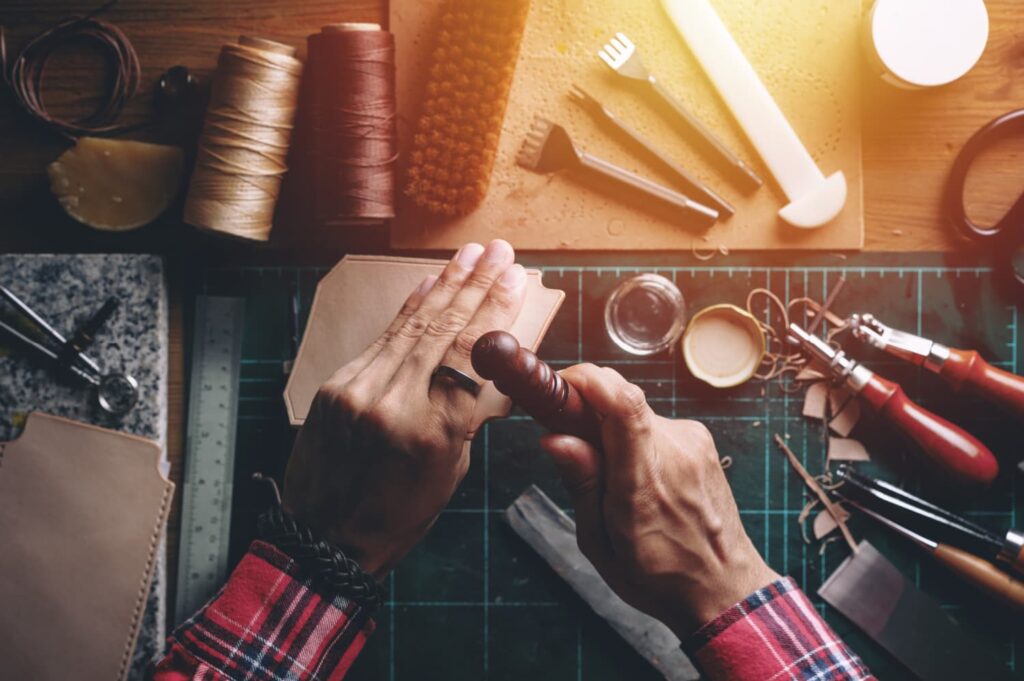
That is the inheritance I keep thinking about. Not a number in an account. Time. Attention. The deliberate choice to show up for someone who has no claim on you, no reason to expect it, and to keep showing up anyway. You cannot put a dollar figure on that. You cannot put it in a will. What you can do is carry it forward, the way that young man stood in a room full of people and made a promise, and then went home and picked up his tools.
My grandfather Anthony was a different kind of man entirely. He was larger than life in the truest sense of the phrase, the kind of person who filled whatever room he walked into. He had been a boxer. He drove race cars. He owned businesses. And he was a storyteller who could hold a table captive for hours, the stories always better the second time around because he knew exactly where to pause.
For his grandchildren, he saved his best material. There were fairy tales, tall tales, stories about Hocus Pocus Johnny Mocus, his magical cousin who could do things no ordinary person could explain. He told us my grandmother was a witch. He told us the scary basement was guarded by alligators who watched over his barrels of treasure. He was missing the tip of his right index finger, and when we asked about it, he told us one of the alligators had bitten it off. We believed him completely. We were absolutely terrified of that basement.
But Anthony did not just entertain us. He taught us. He taught us the value of money, the importance of kindness, and the difference between right and wrong, sometimes in ways you did not see coming.
One afternoon he caught my siblings and me pretending to smoke candy cigarettes. That evening he sat my sister on one knee and me on the other, handed us each a real cigarette, lit them, and told us to inhale as hard as we could. I will not describe what happened next. Some people might call that a harsh lesson. Anthony would have called it an efficient one. I have never smoked a cigarette in my life.
On Sunday mornings, on the way to church, he made us stop at the house of a difficult old woman who lived two doors down. She was not warm. She was, frankly, a little frightening. But every week Anthony sent us to her door to ask if she needed anything. She would hand us a small purse of coins, and we would go buy her the Sunday paper and some hard rolls from the bakery. He never made a speech about it. He just made us do it, week after week, until it was simply what you did. You were kind to people even when they made it hard. Especially then.
When Anthony passed, a stranger came to pay his respects. We had never met him. He told us my grandfather had helped him get into college and helped him pay his way. We had no idea. My grandfather, who could fill a room with a story, who had raced cars and built businesses and terrified his grandchildren with tales of basement alligators, had also quietly, without any audience, helped a young man get his start. That was not a story he told about himself. It was just something he did, because it needed doing and he could.
And then there was Sylvia.
My grandmother was not a woman who sought the spotlight. She cooked every meal from scratch. She baked bread almost every day. She sewed clothes for her children. She raised her family in the Catholic faith, which is how I was raised, and that faith was not something she wore on Sundays and put away on Monday. It was woven into the ordinary fabric of how she lived, how she treated people, what she asked of herself.
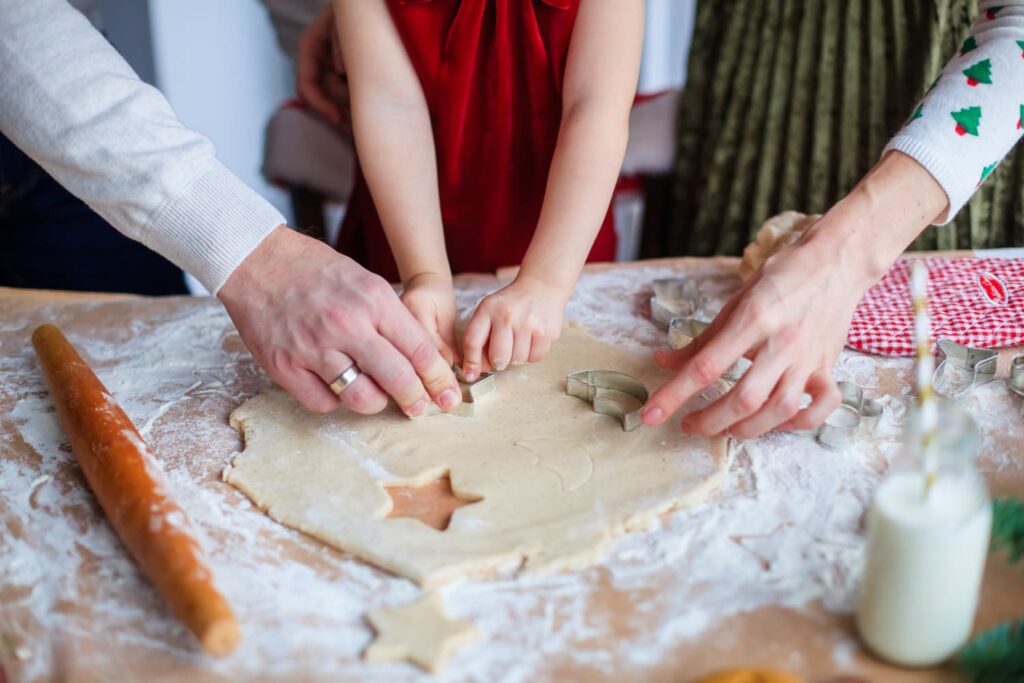
At Christmas she baked more than thirty kinds of cookies. Thirty. I spent hours beside her in that kitchen, watching her hands, learning without knowing I was learning. Everything I know about baking, every instinct I have when I am in my own kitchen, started there. That is her legacy living in me, every single time I measure flour.
Later in life Sylvia opened a men’s clothing store of her own, and a young policeman named Gary used to walk that beat and stop in. He knew her before my mother did, before any of us could have imagined what all of their lives would look like one day. Years later, when my mother and Gary built the leather business, Sylvia became their first employee. And when she worked with us, the family ate dinner together every night before she went home. Every night. That was not a rule anyone stated. It was just what happened when Sylvia was there.
And then there was Betty.
When I married Bill I gained a mother-in-law who could have kept me at arm’s length, assessed me slowly, made me earn my place in the family. Betty did none of that. From the first day I came into her family she made me feel like a daughter. She folded not just me but my entire family into hers as though we had always belonged there. We had our moments, she and I. There was a yellow lamp she wanted to give me, and some faux flowers, and we did not always see eye to eye on matters of decor, and I will leave it at that. But those things were small and we both knew it. What was not small was everything else.
Betty raised Bill and his sister on her own after her husband left, and she was left with debts that her attorneys told her were not hers to pay. She paid them anyway. Every cent, over many, many years, in small increments. She did it because she could not stomach the idea of hard-working families being left without what they were owed. That was not a legal obligation. It was a moral one. She chose integrity when no one could have blamed her for choosing otherwise, and in doing so she showed her children, and all of us who knew her, what it looks like to put your character above your circumstances.
She showed up that way until she passed at the age of ninety-seven. Ninety-seven years of choosing to be present, to be kind, to be the person that other people steadied themselves against. She was a friend to everyone she met. She served her community. The people who loved her did not need to be told what she stood for. They had watched her stand for it, quietly, for decades.
Four people. Four entirely different lives. The same legacy.
There is a thread that runs through all of them. Gary walked past my grandmother’s clothing store as a young policeman on his beat. Sylvia knew him before my mother did. She became the first employee of the business they built together. The young men who grew up around that business are out in the world now, one of them a policeman himself, one of them still working leather with his hands in Texas. And the business itself lives on, passed to the next generation, carrying everything forward in a new form. Nothing about any of that was planned. It is just what happens when people live with their doors open and their hearts paying attention.
I think about this when I hear people say they have not done anything worth leaving behind. That they are not important enough, not successful enough, not remarkable enough to have a legacy. I want to push back on that. You do not have to be famous. You do not have to be wealthy. You do not have to have lived an extraordinary life in any outward sense. Legacy is not a monument. It is not a scholarship fund or a name carved in stone, though those things are wonderful if you have them to give.
Legacy is also the thirteen-year-old boy who grew up knowing someone believed in him. It is the stranger at your funeral who got into college because you made a phone call. It is the woman who paid debts she did not owe because it was the right thing to do. It is the grandmother who made sure the family ate dinner together every night, and whose hands in the kitchen taught you more than you knew you were learning. It is the grandfather who sent you to a difficult neighbor’s door every Sunday until kindness became a habit you did not have to think about. It lives in memory. It lives in the heart. It lives in ten thousand small choices a person makes over a lifetime about whether to notice someone, to listen, to give a little of their time.
None of that requires an illustrious name. All of it requires showing up.
Gary showed up his whole life. He served in the Navy, spent over twenty years as a Milwaukee Police detective, built a business along side my mother from nothing, and still had room, somehow, to go camping with a boy who needed someone to pay attention. He lived wide and loved well, and the proof of it filled the room.
The people who shaped me did not do it by leaving me money. They did it by giving me their time, their stories, their presence, their love. That is the generational wealth you cannot price. It passes from one set of hands to another without anyone writing it down, and yet it carries. For generations.
I keep thinking about that young man in Texas, sitting down at his workbench on an ordinary evening, hand-tooling leather the way Gary taught him. He probably does not think of it as legacy in those moments. He is just doing something he loves, something someone took the time to show him. But that is exactly what legacy is. It is not a ceremony. It is a Tuesday night, and a pair of hands that remember.
That is the legacy. That is the inheritance money cannot buy.
What is the legacy you carry from someone you have loved? Not what they left you in a will, but what they left in you. I would love to know.
If you like the post please share and don’t forget to follow along on Facebook, Instagram or X or Pinterest.
You Might Also Enjoy
Intentional Living After 50: What It Really Looks Like





What a beautiful post! You are truly blessed to have known your 4 people who made a difference in your life and who shaped who you became. I didn’t have that in my immediate family. Raised by an angry, abusive mom and a narcissist dad, I was content to just survive the next beating. However, as an adult, I have been blessed to have a mother in law who welcomed me into a huge family and taught me what love from a ‘mother’ should have been. She also showed me a good example of what a mother in law should be and I try to use what I have learned with my own daughters in law.
Beautiful Elizabeth. I would say my parents will leave much in me and my sweet husband if he passes before me. I never really had in-laws.
It makes me wonder what I can leave “in” someone. I have no descendants to leave anything to, other than some nieces and nephews. Maybe I will leave something good in them?
It could be that this is reason I want to have a blog – to leave something good or interesting in readers? Who knows.
Your post brought tears to my eyes. When my grandson asks if we are rich, I respond with your definition. We are rich.