On slow living in fall, and why you may be so tired
Somewhere around the first week of October, a lot of us start asking the same question. Why am I so tired? Summer carried us along on a tide of barbecues, vacations, long days at the pool or the lake, and fun that we thought would never end (unless the heat had done you in and you were waiting for fall). The busyness of summer felt easy while the light lasted until nine and the mornings arrived early with bright sun pouring through the window. Now the alarm goes off in the dark, the days seem shorter, the evenings close in early, and all that momentum has run out. It is tempting to read the tiredness as aging or just being worn out. It may be nothing of the kind. It may be the fall season asking for a slower pace.
That is what slow living in fall comes down to: listening to something the body already knows, and letting the pace of our days catch up with it. You will find plenty of slow living ideas online, and some of them describe a life that looks out of reach. This is much simpler. It is a few small changes that make room for rest as the days grow shorter.
This post contains affiliate links. If you make a purchase, I will earn a small commission at no extra cost to you. As an Amazon Associate I earn from qualifying purchases.
What Slow Living in Fall Used to Look Like
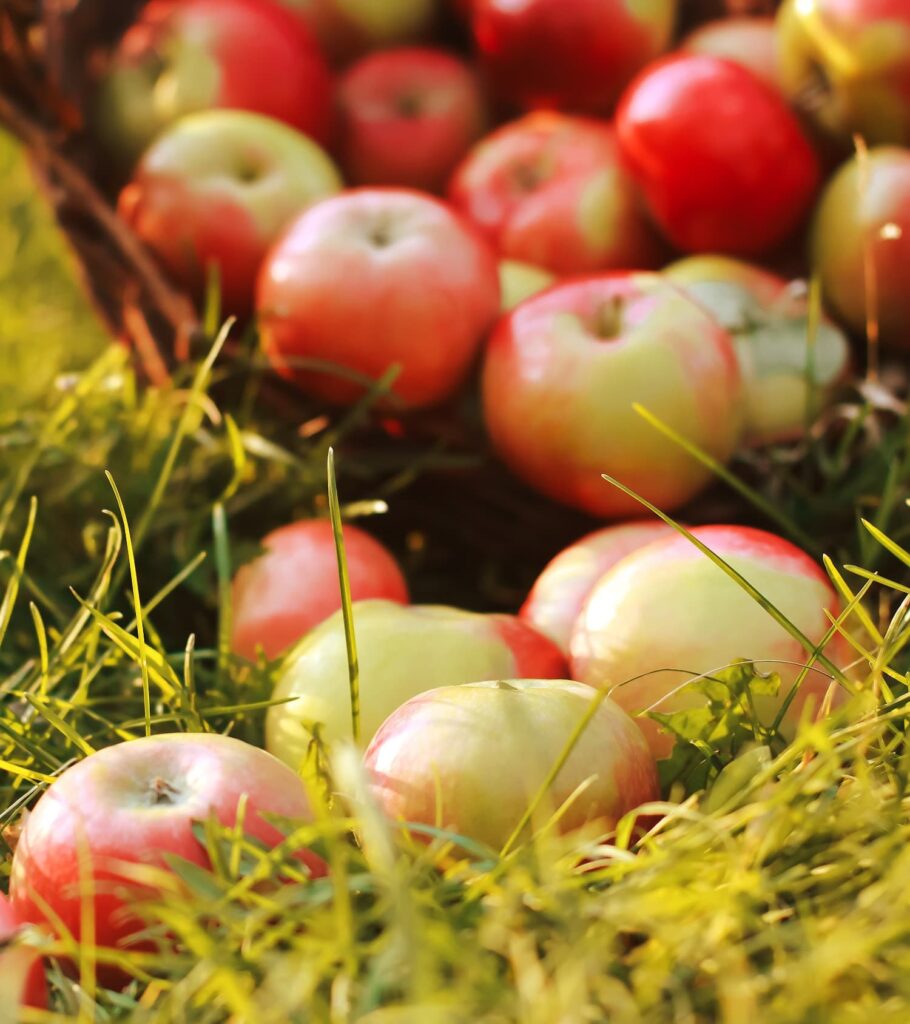
I grew up eating seasonal foods, though no one called it that. Fall was the end of tomatoes and the start of everything that keeps. Apples in the fall, kept through winter. Potatoes, squash, turnips, rutabaga, the hardy winter crops that stored well and lasted. Fresh citrus was not something that appeared in the refrigerator on an ordinary Tuesday. It was a gift, literally, something my grandparents and aunts and uncles brought home from their annual winter trip to the Florida Keys, or sent up in a box. Grapefruits and oranges, wrapped in tissue paper. We ate them slowly because there were not many and they would not come again until the spring.
The apples were part of that, too, though I never thought about it until much later. A little over a century ago, the USDA counted some 14,000 named varieties of apples in this country. About 2,500 are still grown today, and only around eleven of them make up ninety percent of what lands in our grocery stores. My grandmother had more to choose from in October than we do now.
Eating seasonal produce meant living inside the season, arranging your days and your table around where the year actually was. The fullness of the crops filled the cellar, the anticipation of the holiday season built with every week, and the pace of life eased along with the fading light. That calendar was not arbitrary. It was a way of living with the seasonal rhythms, and our bodies were built for it. For a few months every year, it was the most abundant time of year, and it was also the time everyone slowed down.
Simple Ways to Begin Slow Living in Fall
You may think slow living is for people with more time than you have, but the way in is much smaller than that. You need about twenty minutes and a willingness to take the season seriously. You do not need a slow living guide or a long list of fall activities to get started. The simplest way in is the one already waiting outside your door.
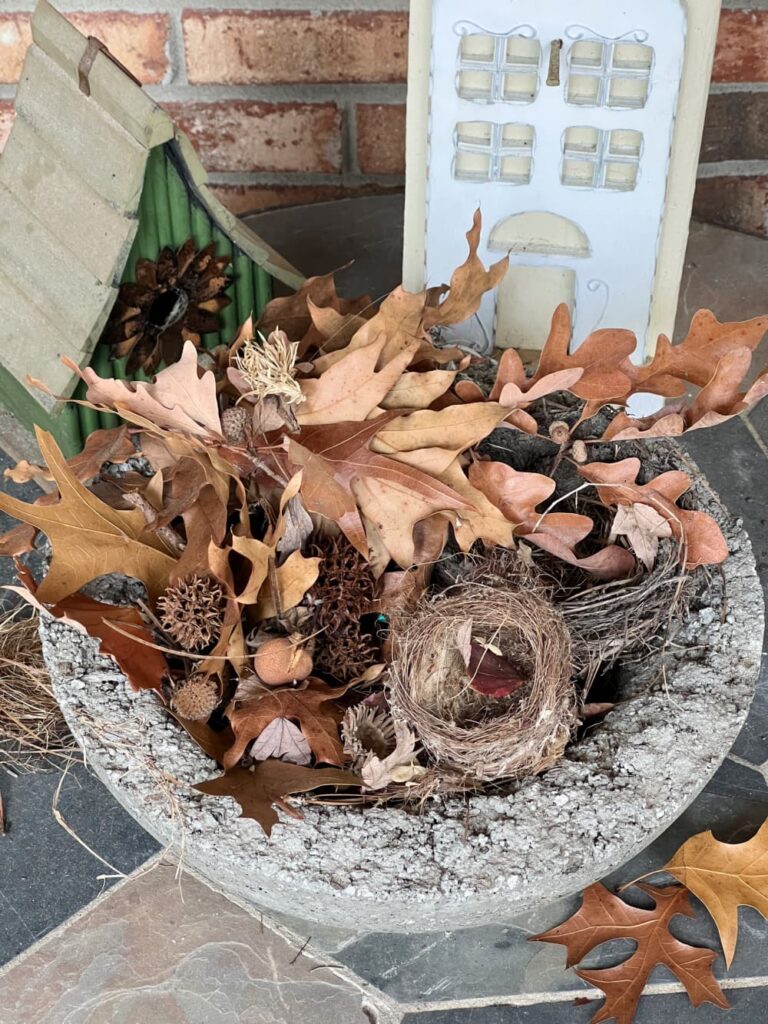
Start with the morning light. Step outside before the day gets going, onto the front porch, the back step, the driveway. Take a deep breath of the crisp air and look at the trees, the pine cones on the ground, the low light coming in softer than it did in August. Both experts in the Real Simple piece say morning light is what tells the body it is time to wake up, so as the days shorten, it helps to go looking for it. This is one of the easiest ways to welcome the new season, and it costs nothing.
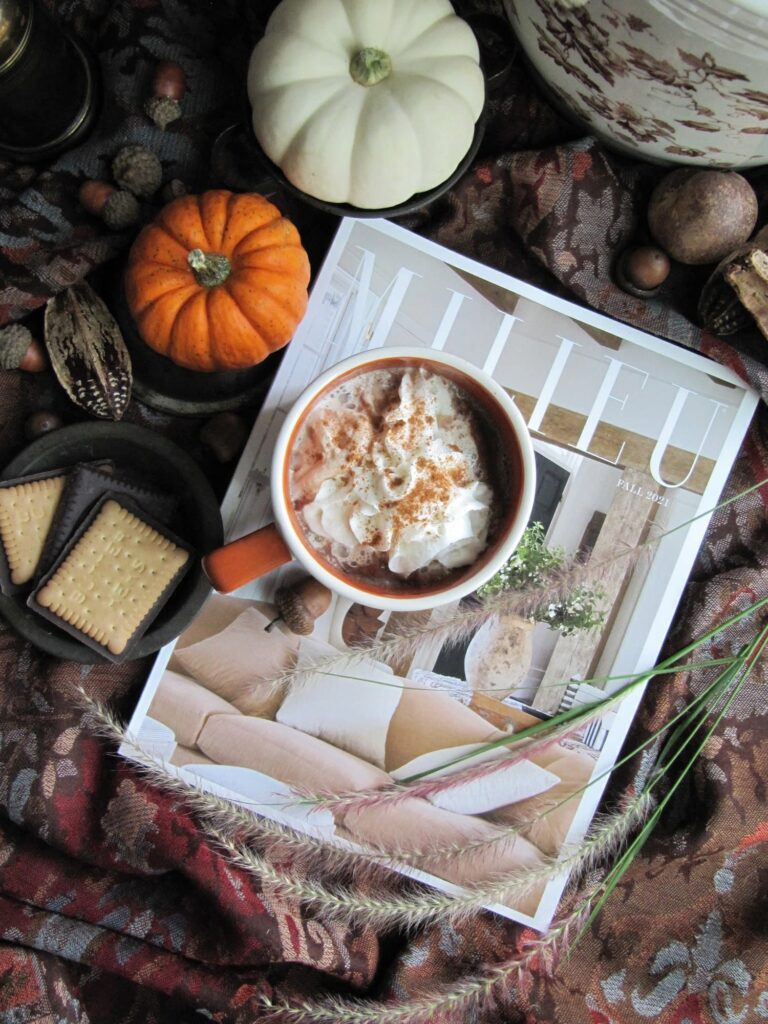
Then let the evenings be evenings. Early nights are not a failing. On chilly evenings, the body is doing what it was built to do. Dr. Brager advises keeping screens out of the hours before bed, since the light from phones, tablets, and televisions can make the next morning harder. Try lighting candles instead of turning on every overhead lamp. Pull out the soft blankets. Pick up a new book, a real one. Make a hot drink, a cup of tea or a mug of hot chocolate, and save the pumpkin spice latte for the afternoon, because Dr. Nunez suggests skipping caffeine, alcohol, and heavy meals close to bedtime.
If you can, keep your bedtime and waking time close to the same each day. Dr. Nunez says that steadiness helps the body settle into the season. He also points to the health benefits of restful sleep, which he credits with sharper focus, steadier energy, and an easier time handling stress. It is the one piece of schedule advice I would keep, because it is about rhythm and not hustle. Over time, those small changes add up to a cozy daily routine that fits the energy of the season instead of fighting it.
At the table, let the season decide what you cook. Sweet potatoes, winter squash, root vegetables, the cozy recipes that take their time on the stove and fill the house. Comforting meals like these are among the best ways to settle into the autumn months. Spending time in the kitchen on a slow Saturday is its own form of seasonal living. (My fall soup post has the recipes I return to every year.)

Slow Living Ideas for the Autumn Months
Once the mornings and evenings feel a little slower, you might want something to fill the extra room, and fall is a great time of year for it. A trip to the pumpkin patch is a classic for a reason. So is apple picking at a farm within driving distance, or pumpkin picking with whoever in your life still enjoys it. A farmers market still running into October is worth the detour. Invite people over for soup and board games on a chilly evening and let the night run long. Walk a short loop in a local park and notice the colors of the season.
If you are looking for a new favorite activity, this is the best time to start one. Slow living hobbies are the ones with no deadline and no audience: knitting, baking, a puzzle on the dining room table, a journal kept by the window. Pick one and let it be a small thing. The goal is a slow living lifestyle that suits you, not a longer to-do list with the word slow on it.
What Slow Living in Fall Looks Like in This House
I have written before about my morning ritual, the Indigo Room, the warm drink, the gratitude journal in the early quiet. In fall that slow morning deepens without any effort on my part. The light comes in at an angle that does not exist in July. Once the dogs stir and Bill is up, I open all the doors, as many as the morning allows. I learned this from my old neighbors, who were from Spain. They aired the house every single day, rain, snow, or shine, blankets hung over the railings, windows open regardless. Crisp fall air moving through the house in those first hours feels like the whole morning takes a breath and settles.
The afternoon walk has no fitness agenda. No step count, no podcast running underneath. Just the path and the dogs and the natural elements of the season. The kitchen on a slow Saturday takes me back to my grandparents and to my mother. It belongs to something that simmers for two hours, a soup, a braise, something that fills the house and does not allow for hurrying. None of these things are complicated. All of them require choosing: choosing to stop, and to enjoy the season you are in.
The darker nights are not a problem to solve with more light and more activity. They are an invitation to read, to sit, to cook something long, to sleep when the body says sleep. That is daily life at a slower pace, and it asks very little of us except the present moment.
The Permission Slip
Women in midlife are skilled at producing and much less practiced at giving ourselves permission to stop. We have spent years being useful, being available, being the ones who keep things moving. So when October arrives and the energy of summer drains away, we treat the tiredness as something to fix. There is a middle ground between doing everything and doing nothing, and fall is where it lives.
Maybe it is simply the season asking. The harvest did not end so people could find more to do. It ended so they could rest before the winter months and the next growing season. That logic still holds, and the body still keeps to it.
So if you wake up one of these dark mornings and feel the pull to stay a little longer under the blankets, I hope you let yourself. Open a door or two. Put the kettle on. Let the soup simmer all afternoon, and let the evening come early. Summer was lovely, and it will come around again. For now, the season has something else in mind for us, and it starts with slowing down.
Everything I write about circles back, eventually, to intentional living after 50, to the idea that the second half of life is a chance to live more deliberately rather than more automatically. Slow living in fall is one of the most immediate places to start. The season is already doing the work. You only have to let it.
Thank you for spending a little time here with me. I hope this gave you permission to slow down this fall. If you’d like to keep the conversation going, you can find me on Pinterest, Instagram, and Facebook.
You may also enjoy: